



Food-Grade Argan Oil
Food-Grade Argan Oil and Cardiovascular Health Scientific Benefits
Argan oil, a natural treasure from Morocco, is widely known for its cosmetic applications in skincare and haircare. However, in recent years, food-grade Argan oil has gained increasing scientific attention for its numerous health benefits, including its impact on cardiovascular health. Extracted from the kernels of the Argania spinosa tree in Morocco, edible Argan oil is rich in bioactive compounds that contribute to improved cholesterol balance and heart protection.
Recent clinical studies suggest that regularly consuming Moroccan Argan oil may improve blood lipid profiles, making it a valuable part of a balanced diet.

Why is Cholesterol balance important?
Cholesterol is transported in the blood through lipoproteins, with the two main types being:
- Low-Density Lipoprotein (LDL), often referred to as “bad cholesterol”, transports cholesterol from cells to the liver, and it can contribute to plaque formation in arteries (atherosclerosis).
- In contrast, high-Density Lipoprotein (HDL), known as “good cholesterol,” transports cholesterol from the blood to the liver, where it is eliminated from the body. It thus helps remove excess cholesterol from the bloodstream.
An imbalance in cholesterol levels, particularly elevated LDL levels, which can increase the risk of atherosclerosis and cardiovascular disease, can lead to various health problems. Therefore, dietary strategies that raise HDL levels and lower LDL levels are essential for long-term heart health.
How does edible Argan Oil improve blood lipids?
Recent studies have examined the effects of Argan oil consumption on blood lipids in healthy volunteers, as follows:
Increase in HDL (Good Cholesterol)
The scientific research shows that regular consumption of Argan oil significantly increases HDL levels. Higher HDL concentrations are associated with reduced cardiovascular risk and improved lipid metabolism.
Reduction of LDL (Bad Cholesterol)
Clinical observations suggest that edible Argan oil may help reduce LDL cholesterol levels. Lower LDL levels reduce the risk of arterial plaque buildup and support healthier blood circulation.
Impact on Triglycerides
In addition to improving the balance of HDL and LDL, Argan oil consumption has been associated with reduced triglyceride levels, further contributing to cardiovascular protection.
Scientific evidence: clinical studies on Argan Oil
A nutritional intervention study involving 96 participants demonstrated measurable improvements in lipid profiles after consuming 25 g of Argan oil daily for three weeks.
The key findings included:
- LDL cholesterol reduced by approximately 13%
- Significant increase in HDL levels
- Improved antioxidant status
On the other hand, other studies have suggested that phenolic compounds in Argan oil inhibit LDL oxidation, a critical step in atherosclerosis.
The results of these studies confirm the potential of Argan oil as a natural dietary supplement for cardiovascular health.
What makes Moroccan Argan Oil so effective?
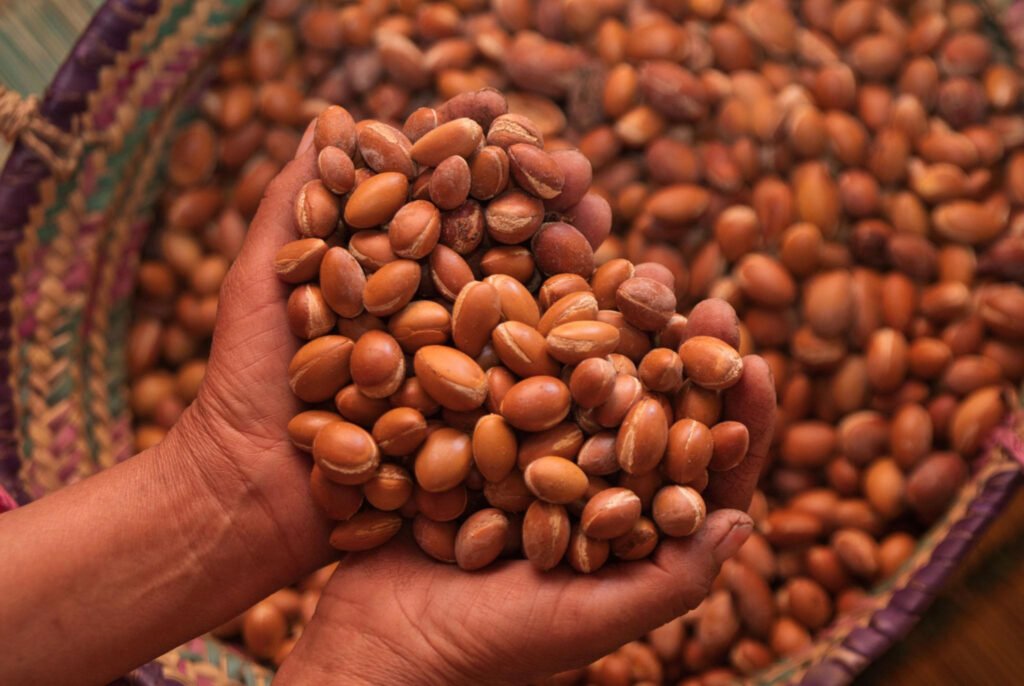
The efficacy of Argan oil is linked to its unique biochemical composition:
1. Monounsaturated Fatty Acids
Rich in monounsaturated fatty acids, such as oleic acid (omega-9), which benefit cardiovascular health. These fatty acids help increase HDL levels and reduce LDL levels.
2. Tocopherols (Vitamin E)
Argan oil contains high levels of a powerful antioxidant, natural vitamin E, which may protect LDL particles from oxidative damage.
3. Phytosterols
These bioactive compounds reduce intestinal cholesterol absorption.
4. Polyphenols and Antioxidants
They contribute to anti-inflammatory effects and vascular protection.
This rich biochemical composition makes Moroccan Argan oil one of the most nutritionally valuable edible oils in the Mediterranean diet model.
How to incorporate edible Argan oil into a healthy diet?
Discover how to incorporate edible Argan oil easily into a healthy diet.

Food-grade Argan oil can be used as a healthy alternative to saturated fats. When consumed in moderation as part of a balanced diet, Moroccan Argan oil may support cardiovascular health thanks to its beneficial fatty acids and antioxidants. Due to its high calorie content, consumption should remain moderate. Excessive consumption can contribute to weight gain and other health problems.
Conclusion: A natural cardiovascular ally from Morocco
Food-grade Argan oil may help improve cholesterol balance and support cardiovascular health. Thanks to its rich composition of beneficial fatty acids and antioxidants, it is a valuable addition to a heart-healthy diet.
However, it is essential to maintain moderate and balanced consumption of Argan oil to maximize health benefits.
Morocco is the only country where Argan oil is traditionally produced, making Moroccan Argan oil a unique natural product valued worldwide.
As a Moroccan supplier of premium food-grade Argan oil, we provide high-quality, traceable, and sustainably sourced products suitable for international distributors, food brands, and wellness companies seeking reliable bulk and private-label solutions.
References
1. Cherki M et al. Argan oil: What are the benefits for cardiovascular diseases? Pharmacol Res 2006; 54: 1–5
2. Berrougui H et al. Phenolic-extract from Argan oil (Argania spinosa L.) inhibits human low-density lipoprotein (LDL) oxidation and enhances cholesterol efflux from THP-1 macrophages. Atherosclerosis 2006; 184: 389–396.
3. Derouiche A et al. Nutritional intervention study with Argan oil in man: effects on lipids and apolipoproteins. Ann Nutr Metab, 2005; 49: 196–201.